
Cabinet Care & Maintenance Guide
How to Care for Your Freshly Painted Cabinets
Congratulations on the new look. Your cabinets are dry to the touch already, but the finish keeps hardening for about a month after we leave — treat them gently during that window and they’ll stay beautiful for years. Here’s exactly how.
The 30-day cure
Every kitchen we finish gets the same professional cabinet enamel, sprayed on in our shop-quality process and cured under the same conditions. It dries to the touch within a day or two — you can close the doors and use the kitchen right away. But “dry” and “cured” aren’t the same thing. Underneath that dry surface, the finish keeps hardening for roughly a month, slowly building up the toughness that makes it hold up to daily kitchen life for years to come.
That’s the whole idea behind this guide: a short list of things to go easy on for the first 30 days, and a shorter list of everyday habits that keep the finish looking like day one for good.
Paint cures — fully hardens — over about 30 days. Everything in the “please don’t” list below applies extra-strictly during that window.
Most of it is just good practice forever, though — so it’s worth keeping in the back of your mind even after the 30 days are up.
During the First 30 Days — Please Don’t
Small stuff, but this is where almost every early ding and dull spot comes from.
-
Use harsh cleaners. No degreasers, ammonia sprays (glass cleaner included), abrasive powders, or Magic Erasers — they can soften or dull uncured paint.
-
Scrub. Even the rough side of a sponge can burnish a curing finish. Wipe, don’t scrub.
-
Hang anything on the doors. Wet towels or rags draped over a cabinet door are the single most common cause of early damage we see.
-
Slam doors and drawers. Close them softly while the finish is still hardening underneath.
-
Stick anything to the paint. No tape, adhesive hooks, or child-safety adhesives on painted surfaces.
-
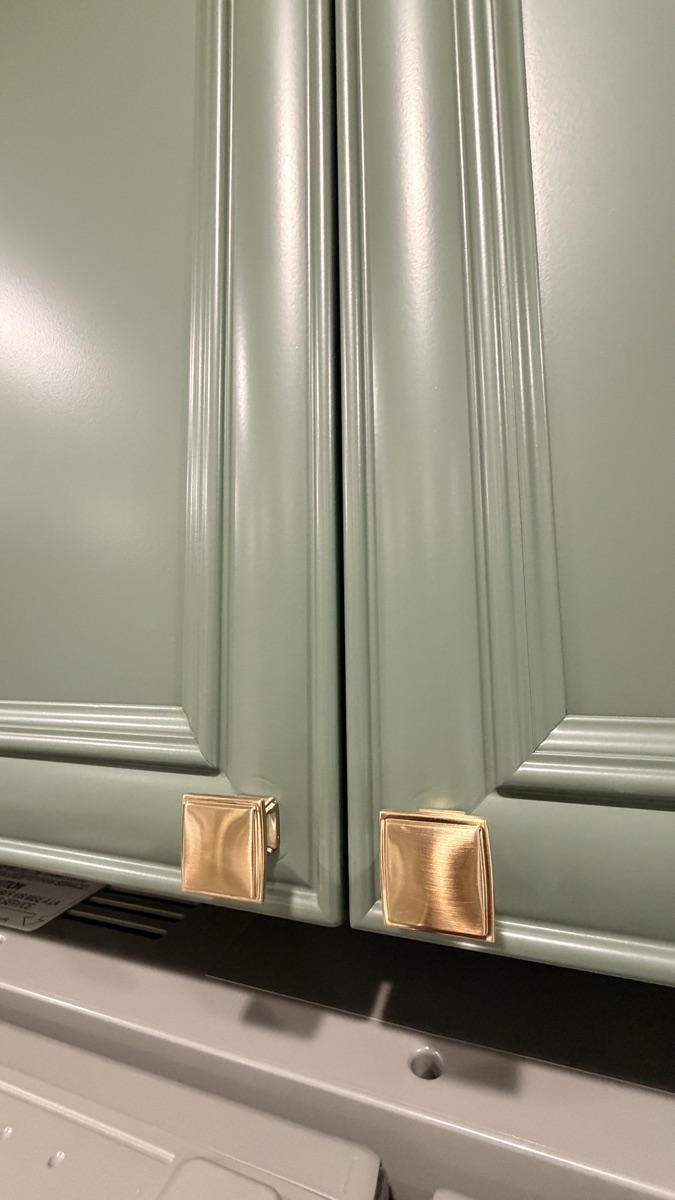
Bump edges with rings, keys, or cookware. Little knocks around handles and door edges are the most common dings we get called about.
Everyday Care
Once you know these two short lists, you know everything the finish will ever ask of you.
Everyday Cleaning — Do
-
Wipe with a soft, damp microfiber cloth.
-
For grime, a drop of mild dish soap in warm water. That’s all it ever needs.
-
Dry with a soft cloth after wiping — no standing water, especially near the sink and dishwasher.
-
Wipe cooking splatter sooner rather than later, so it never needs scrubbing.
Never Use — Even After 30 Days
-
Ammonia or bleach-based cleaners
-
Abrasive pads, scouring powder, or Magic Erasers
-
Wax, polish, or oil-based sprays — they build up over time and yellow
-
Steam cleaners on or near painted surfaces
Know Someone Who Could Use This Guide?
If a friend or family member is thinking about their own kitchen, we’d love to give them the same free, no-obligation in-home estimate you got — same family-owned crew, same careful process.
Get a Free EstimateFrequently Asked Questions
We’d rather you didn’t, even after the first 30 days. Magic Erasers are a mild abrasive — they work by gently sanding away a thin layer of whatever they’re rubbed against, which is exactly what you don’t want on a painted finish. A soft, damp microfiber cloth with a drop of mild dish soap handles anything a Magic Eraser would, without the risk of dulling or thinning the paint over time.
The simplest one: a soft microfiber cloth, warm water, and a drop of mild dish soap if there’s grime to cut through. Dry the surface afterward so water doesn’t sit in the seams. Skip ammonia and bleach-based cleaners, degreasers, and anything abrasive — they’re harder on the finish than the dirt they’re removing.
Professional cabinet enamel is dry to the touch within a day or two, but it keeps hardening for about 30 days before it reaches full cured strength. During that window, treat the cabinets a little more gently than usual — after 30 days, the everyday cleaning routine above is all they’ll ever need.